
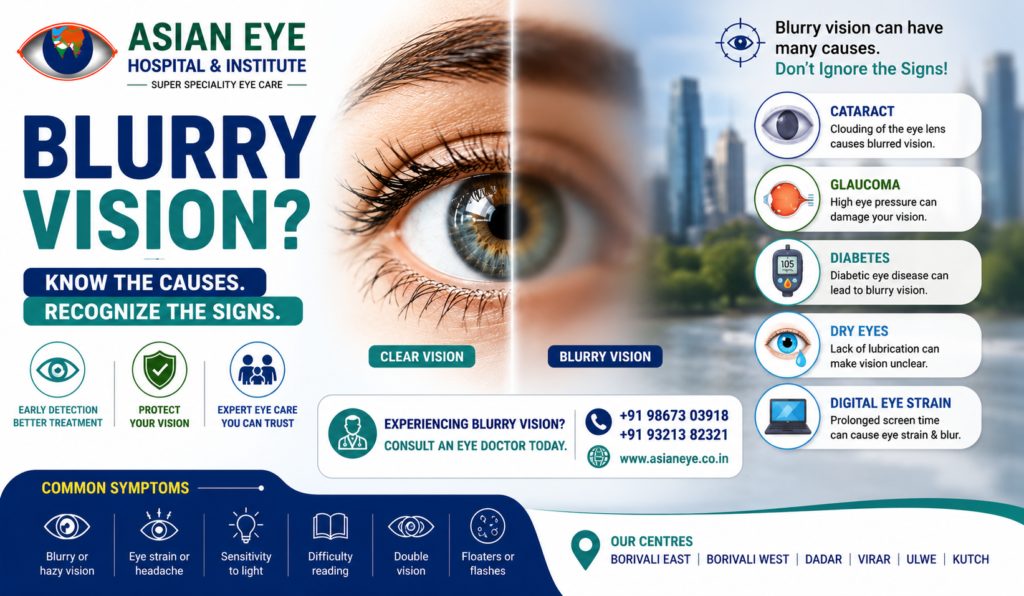
Blurry Vision: Causes, Symptoms and When to Consult an Eye Doctor
Occasional blurry vision can happen to anyone. However, persistent or sudden blurred vision should never be ignored. It may be a simple refractive error—or a warning sign of a serious eye condition that requires immediate medical attention.
👁 What Is Blurry Vision?
Blurry vision occurs when objects appear out of focus, hazy, or unclear. It can affect one eye or both eyes and may develop gradually or suddenly.
Some people experience blurry vision while reading, driving, using digital devices, or looking at distant objects.
⚠ Common Causes of Blurry Vision
👓 Refractive Errors
Nearsightedness, farsightedness, and astigmatism are among the most common causes of blurred vision.
🌫 Cataracts
Aging-related clouding of the eye lens can cause gradual vision blur and glare.
💧 Dry Eyes
Insufficient tear production can cause fluctuating blurry vision and discomfort.
🩺 Glaucoma
Increased eye pressure can damage the optic nerve and affect vision.
🔬 Retinal Disorders
Retinal detachment, diabetic retinopathy, or macular degeneration may cause vision distortion.
📱 Digital Eye Strain
Long hours on screens may lead to temporary blurred vision and eye fatigue.
🚩 Symptoms That Often Accompany Blurry Vision
- Headaches
- Eye strain
- Double vision
- Sensitivity to light
- Dryness or irritation
- Difficulty seeing at night
- Floaters or flashes of light
- Loss of peripheral vision
- Difficulty reading small text
🆘 When Should You Consult an Eye Doctor?
You should schedule an eye examination if blurry vision:
- Persists for more than a few days
- Occurs suddenly
- Affects only one eye
- Interferes with reading or driving
- Is accompanied by headaches or dizziness
- Occurs in people with diabetes or high blood pressure
💻 Can Screen Time Cause Blurry Vision?
Yes. Digital eye strain has become one of the most common causes of temporary blurry vision.
Common symptoms include:
- Blurred vision after prolonged screen use
- Dry eyes
- Neck and shoulder discomfort
- Difficulty refocusing
Following the 20-20-20 rule can help reduce eye strain.
🏥 How Is Blurry Vision Diagnosed?
An eye specialist may recommend:
- Comprehensive eye examination
- Visual acuity testing
- Eye pressure measurement
- Retina evaluation
- Corneal examination
- OCT retina scanning
Early diagnosis allows timely treatment and helps prevent complications.
✨ Treatment Options for Blurry Vision
👓 Prescription Glasses
Correct refractive errors and improve visual clarity.
💧 Lubricating Eye Drops
Help manage dry eye-related blurred vision.
🔬 Retina Treatment
Required for diabetic eye disease and retinal disorders.
🌫 Cataract Surgery
Improves vision affected by cataracts.
❓ Frequently Asked Questions
Is blurry vision always serious?
No. It may result from refractive errors or fatigue, but persistent or sudden vision blur should always be evaluated.
Can diabetes cause blurry vision?
Yes. Diabetes can affect retinal blood vessels and cause diabetic retinopathy.
Can dry eyes cause blurry vision?
Yes. Tear film instability can temporarily affect visual clarity.
Can blurry vision be corrected?
Many causes of blurry vision can be successfully treated when diagnosed early.
Experiencing Blurry Vision?
Don’t ignore changes in your eyesight. Schedule a comprehensive eye examination with the specialists at Asian Eye Hospital & Institute.
Borivali East | Borivali West | Dadar | Virar | Ulwe | Kutch
Clear Vision Starts With Early Diagnosis.