
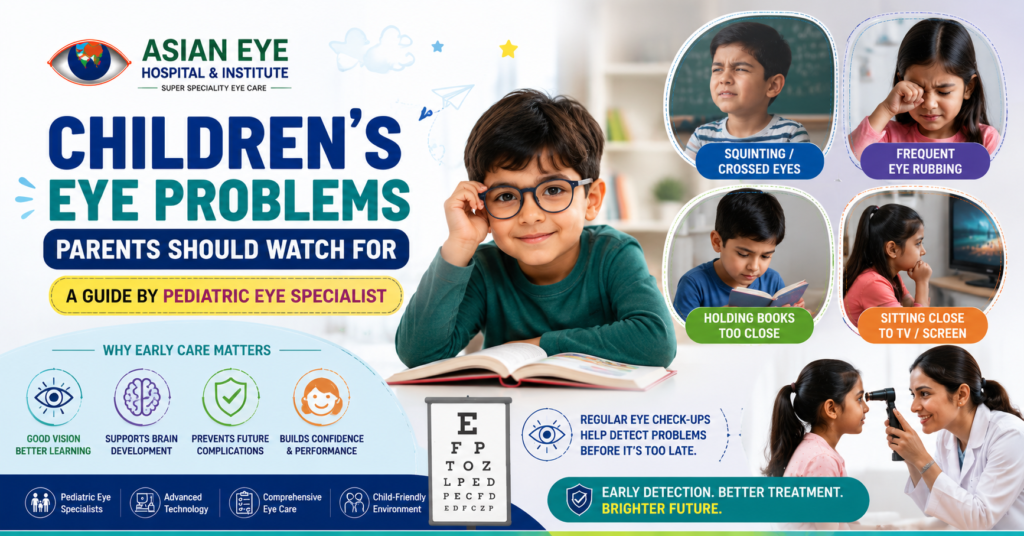
Children’s Eye Problems Parents Should Watch For: A Guide by Pediatric Eye Specialist
Many childhood eye problems develop gradually and may not be obvious to parents. Early detection can help prevent vision loss, improve learning, and support healthy visual development.
👁 Why Children’s Eye Health Matters
Vision plays a crucial role in a child’s learning, social interaction, sports performance, and overall development. Studies suggest that a large portion of classroom learning is visual. If a child cannot see clearly, it may affect school performance and confidence.
⚠ Common Eye Problems in Children
📖 Myopia (Nearsightedness)
Difficulty seeing distant objects such as classroom boards, TV screens, or road signs.
👓 Astigmatism
Causes blurred or distorted vision at various distances.
↔ Squint (Strabismus)
One eye may turn inward, outward, upward, or downward.
👁 Lazy Eye (Amblyopia)
Reduced vision in one eye due to improper visual development.
🌸 Eye Allergies
Itching, watering, redness, and frequent eye rubbing.
💻 Digital Eye Strain
Increasingly common due to prolonged screen exposure.
🚩 Warning Signs Parents Should Never Ignore
- Frequent squinting
- Sitting very close to the television
- Holding books too close while reading
- Frequent headaches
- Excessive blinking
- Constant eye rubbing
- Crossed or wandering eyes
- Tilting the head while looking at objects
- Poor academic performance
- Difficulty concentrating during reading
- Complaints of blurry vision
- Sensitivity to light
📱 Screen Time & Children’s Eye Health
Today’s children spend more time on digital devices than ever before. Excessive screen exposure can contribute to:
- Digital eye strain
- Dry eyes
- Headaches
- Blurred vision
- Progression of myopia
Pediatric eye specialists recommend regular breaks using the 20-20-20 rule and encouraging outdoor activities daily.
🩺 When Should Your Child Have an Eye Examination?
- First eye screening during infancy
- Comprehensive eye exam before starting school
- Routine eye check-ups every 1–2 years
- Immediately if any warning signs appear
🏥 How a Pediatric Eye Specialist Can Help
Pediatric eye specialists are trained to diagnose and manage eye conditions specific to children. They use child-friendly examination methods and specialized equipment to evaluate vision, eye alignment, focusing ability, and overall eye health.
At Asian Eye Hospital, pediatric eye care services include:
- Child eye check-ups
- Myopia management
- Lazy eye treatment
- Squint evaluation and treatment
- Pediatric vision screening
- Eye allergy management
❓ Frequently Asked Questions
What is the most common eye problem in children?
Myopia (nearsightedness) is one of the most commonly diagnosed vision problems in school-age children.
Can screen time damage children’s eyes?
Excessive screen use may contribute to eye strain and may influence progression of myopia in susceptible children.
At what age should children get their eyes tested?
Eye screenings should begin in infancy, with comprehensive examinations before school age and periodically thereafter.
Can lazy eye be treated?
Yes. Early diagnosis and treatment often provide better outcomes for visual development.
Book a Pediatric Eye Check-Up Today
If your child is showing signs of vision problems, early evaluation can make a significant difference.
Asian Eye Hospital & Institute
Borivali East | Borivali West | Dadar | Virar | Ulwe | Kutch
Better Vision Starts Early.